FDA Authorized — November 2024
Light Therapy for AMD
Informed Consent for Valeda® Light Delivery System Treatment — a non-invasive photobiomodulation therapy for dry age-related macular degeneration.
Informed Consent for Valeda® Light Delivery System Treatment
You are being offered this treatment because you have dry age-related macular degeneration (AMD). This informed consent describes the treatment and procedures you will receive. If you have questions or do not understand something, please ask your treating physician to explain. This information is part of your informed consent process and is provided to help you make the best decision for yourself and your eyes.
Please review this document carefully to make an informed decision about whether you would like to receive this treatment. It may contain words that you do not understand. Take your time and feel free to ask any questions before you consent to proceed. Discuss any questions with our medically trained staff.
Background
AMD is a progressive disease of the retina (the part of the eye that detects visual signals and sends them to the brain). AMD is the leading cause of vision loss in people over 65 years. There are two categories of AMD: the dry form accounts for 80 to 90% of all AMD cases and the wet form accounts for 10 to 20%.
The treatment you are being offered is for dry AMD.
The exact cause of AMD is not known. There is evidence to suggest that several factors are involved. These include reduced blood flow to the eye through the small blood vessels and a buildup of waste products in the cell.
There is no cure for AMD. LumiThera, Inc. developed a device called the Valeda® Light Delivery System to treat dry AMD. The device has been approved for the treatment of dry AMD in Europe since 2019. The U.S. Food & Drug Administration (FDA) authorized Valeda on November 4, 2024, for the treatment of dry AMD to improve vision.
Valeda delivers a light-based therapy called photobiomodulation (PBM) to the retinal tissue. PBM is the application of specific wavelengths of light to the eye. Valeda uses Light Emitting Diodes (LED) which are very low powered and do not cause any heat damage to the eye. This is NOT a laser device. The FDA has approved similar wavelengths of light for use in other clinical devices for medical conditions such as wrinkles around the eyes, temporary relief of minor muscle and joint pain, arthritis and muscle spasm, and to temporarily improve blood flow in areas where it is applied.
Purpose
The purpose of this treatment plan is to provide you with PBM treatment using the Valeda Light Delivery System to treat your dry age-related macular degeneration and improve vision.
Treatment
This treatment plan includes a series of 9 treatments, approximately 3 times a week over a 3-to-5-week period. Each treatment session takes about 5 minutes per eye.
No special preparation is needed prior to the treatment. Your eyes will not be dilated. No drugs or needles are used in the treatments. You will need to remove your glasses or contact lenses.
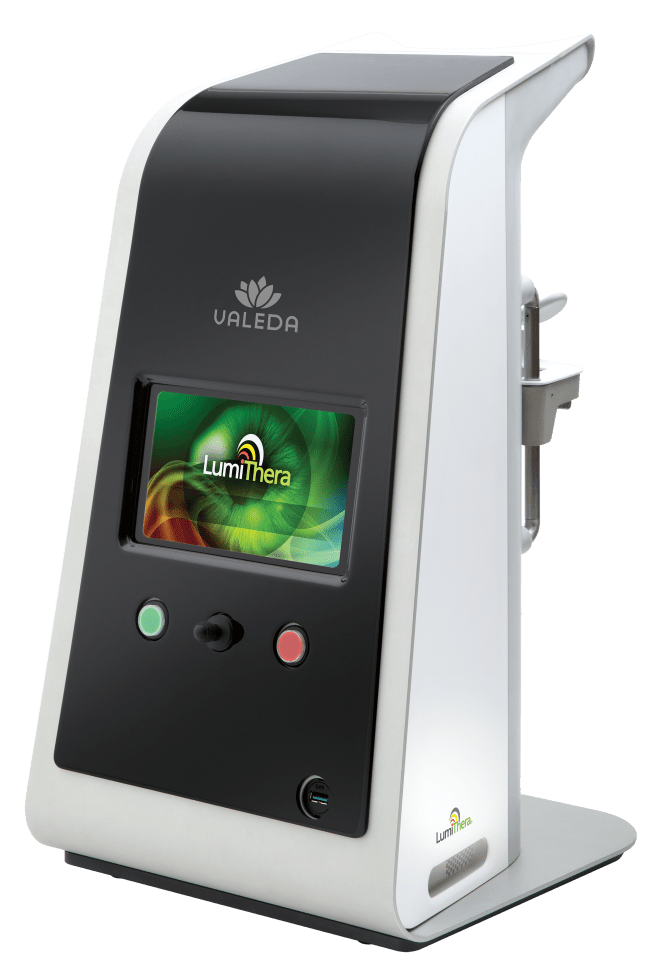
Your eye(s) that are eligible for the treatment plan will receive the PBM treatment using the Valeda Light Delivery System, which uses 3 different wavelengths: red light, near-infrared (invisible light), and yellow light. Your eye(s) will be given a treatment of different wavelengths through both open and closed eyelids to stimulate the retinal tissue at the back of the eye. The Valeda looks similar to the devices you look into to test your vision.
Treatment Visit Details
- You will receive nine (9) treatments over three to five (3 to 5) weeks during each series of treatments.
- Each treatment takes approximately five (5) minutes for each eye treated.
- During the treatment, you will be told when to open your eyes and when to close your eyes.
- There are no eye drops used at the treatment visit.
- There is no discomfort during the treatment.
Alternative Treatments
You do not have to agree to this treatment plan. Alternatives to this treatment include:
- NOT having this treatment
- Lifestyle changes such as stopping smoking
- Dietary changes
- Use of antioxidant vitamins
These options may affect the progression of Dry AMD.
Contraindications for Use
As a precaution, patients have not been tested and should not be treated with Valeda if they have:
- Any known photosensitivity to yellow light, red light, or near-infrared radiation (NIR)
- A history of light-activated central nervous system disorders (e.g., epilepsy, migraine)
In addition, patients should not receive treatment within 30 days of using photosensitizing agents (e.g., topicals, injectables) that are affected by 590, 660, and/or 850 nm light before consulting with their physician.
Potential Risks
The Valeda Light Delivery System has been in use in Europe since 2019. There have been no significant adverse effects reported.
Potential risks for this treatment may include:
- Development of an afterimage — a common occurrence in the eye when staring at a specific color for too long (for example, staring at a bright light then looking away)
- Light sensitivity
- Inconveniences due to the required number of trips to our office
- Fatigue from taking tests and receiving multiple photographs of your eyes
- Possible unknown side effects that could occur
The treating physician may withdraw you from the treatment plan if your condition worsens, if you do not follow the treating physician's instructions, or if the treating physician feels it is in your best interest. You may be withdrawn without your consent, but the treating physician will tell you why.
Limitations of Valeda PBM Therapy
AMD is a progressive disease that may lead to vision loss over time. There is no guarantee that your vision will improve following Valeda treatment.
Even with Valeda treatment, your dry macular degeneration could still progress to wet AMD and loss of vision.
Treatment Plan Commitment
Your participation in this Valeda treatment plan is completely voluntary. You can withdraw your consent to receive this treatment at any time and without any consequences for your medical care.
Costs
The Valeda Light Delivery System is currently not covered by Medicare, Medicaid, or any private health insurance.
Before beginning your treatment plan, you will be provided with a separate written form disclosing your costs associated with the treatments.
Have Questions About This Consent?
Our medically trained staff is available to walk you through every section of this document and answer your questions before you make any decision.
FDA Authorized — November 4, 2024
The Valeda® Light Delivery System
Valeda uses three specific wavelengths of LED light — red, near-infrared, and yellow — to stimulate retinal tissue through both open and closed eyelids. No heat, no lasers, no needles.
Approved in Europe since 2019 with no significant adverse effects reported across thousands of treatments. Now FDA authorized in the United States for the treatment of dry AMD.
Your Retina Specialist
Ready to Discuss Light Therapy for AMD?
Our team is here to answer your questions about Valeda PBM therapy and help you determine if you are a candidate. Contact us today.
Board Certified Ophthalmologist · Vitreo-Retinal Surgeon · Beverly Hills & Huntington Park